cobands
Guards
At the loading site of most transporters, it is necessary to place a channel to prevent the spilling of material produced at the loading point. This channel also plays an important role in contributing to the correct focus of the load. If not, a lateral deviation of the Belt not to match the centres of gravity of this and the material.
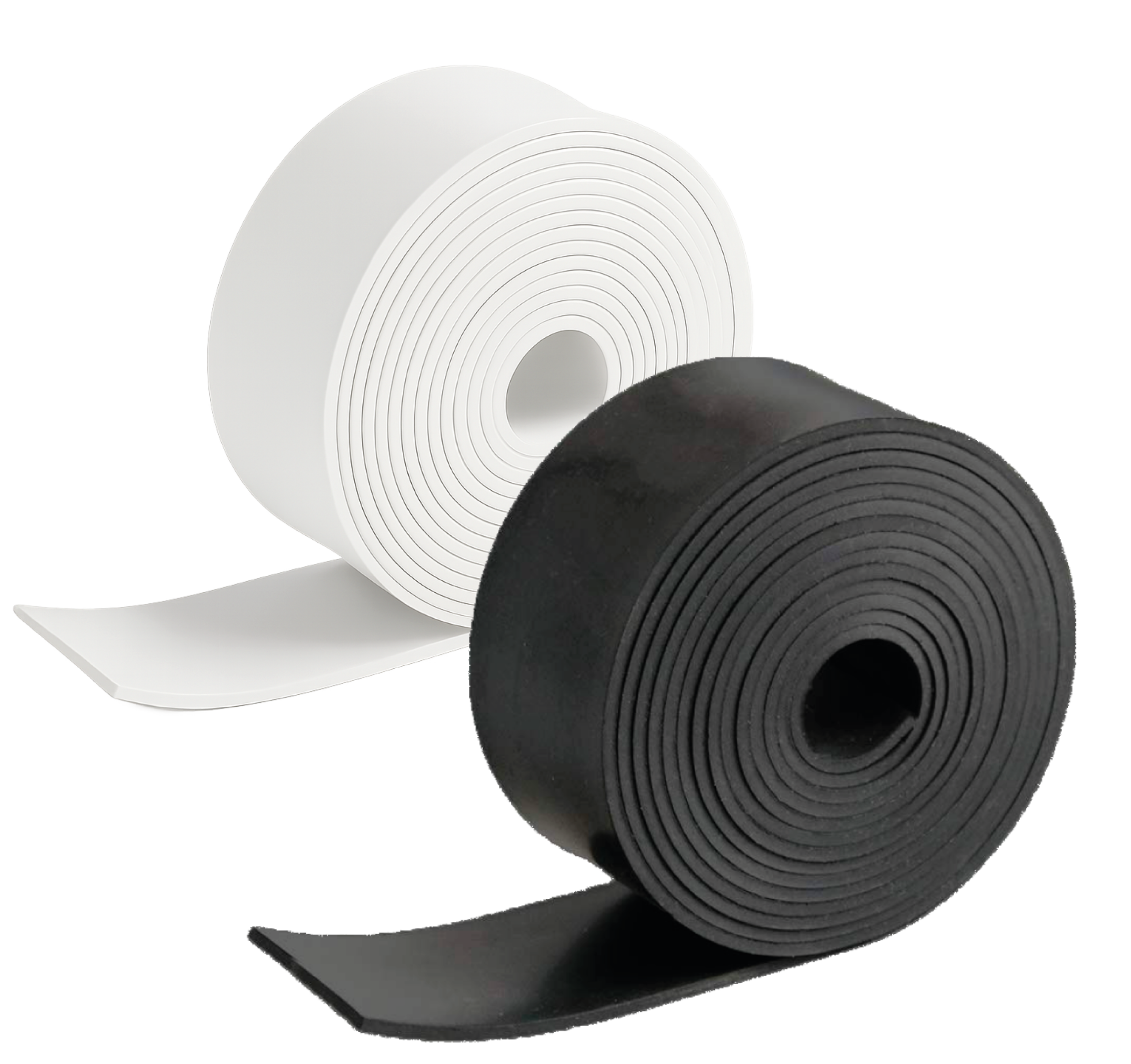
On receiving the load, the side edges of the Belt are curved up, rolling the metal structure of the loading channel, with the resulting immediate cut of the Belt. To avoid this and provide an adequate closure that prevents the spillage of material, it is essential to use rubber guards, which are conveniently removed from the metal structure. The duration of the Belt depends on the low friction coefficient of the guard. To fulfil this function, thecobands CMU- Guards., in several thicknesses, sizes and hardness, depending on the various loading conditions and the materials to be transported.
When installing the ranger, a light must be left between it and the Belt at least one centimeter, increasing the light in the sense of advance of the Beltto facilitate the expulsion of material that may have been caught between the ranger and the Belt.
At the loading site of most transporters, it is necessary to place a channel to prevent the spilling of material produced at the loading point. This channel also plays an important role in contributing to the correct focus of the load. If not, a lateral deviation of the Belt not to match the centres of gravity of this and the material.
On receiving the load, the side edges of the Belt are curved up, rolling the metal structure of the loading channel, with the resulting immediate cut of the Belt. To avoid this and provide an adequate closure that prevents the spillage of material, it is essential to use rubber guards, which are conveniently removed from the metal structure. The duration of the Belt depends on the low abrasion coefficient of the ranger. To perform this function, the ranger developedcobands CMU-A- Guards., in several thicknesses, sizes and hardness, depending on the various loading conditions and the materials to be transported.
When installing the ranger, a light must be left between it and the Belt at least one centimeter, increasing the light in the sense of advance of the Beltto facilitate the expulsion of material that may have been caught between the ranger and the Belt.
When materials are transported with oils, fats, hydrocarbons or solvents in Belts a serious and progressive deterioration in the physical and mechanical properties of rubber, with the consequent damage of the Belt. To solve this macromolecular chemical problem, elastomers have been discovered that have better behavior when they come into contact with these substances.
icobandas s.a.has developed thecobands CMU-A- Guards.specially designed with nitrylic rubber compounds that allow you to have excellent chemical resistance to fats, oils, solvents, etc. It also has excellent performance in conditions that combine high temperatures and oily environments. It is very well resistant to abrasion and retains its flexibility in temperatures up to 120ºC; it is recommended for the transport of hot asphalt mixtures and in general for all service with mineral, vegetable or animal oils.
Rubbercobands CMU-A- Guards.it is tested for 72 hours by aging it in ACPM. Under this test, the rubber cobands increases less than 0.3 grams, which means that it retains its physical-chemical properties for a long time against oilseeds.
At the loading site of most transporters, it is necessary to place a channel to prevent the spilling of material produced at the loading point. This channel also plays an important role in contributing to the correct focus of the load. If not, a lateral deviation of the Belt not to match the centres of gravity of this and the material.
On receiving the load, the side edges of the Belt are curved up, rolling the metal structure of the loading channel, with the resulting immediate cut of the Belt. To avoid this and provide an adequate closure that prevents the spillage of material, it is essential to use rubber guards, which are conveniently removed from the metal structure. The duration of the Belt depends on the low abrasion coefficient of the ranger. To perform this function, the ranger developedcobands CMU-T- Guards., in several thicknesses, sizes and hardness, depending on the various loading conditions and the materials to be transported.
When installing the ranger, a light must be left between it and the Belt at least one centimeter, increasing the light in the sense of advance of the Beltto facilitate the expulsion of material that may have been caught between the ranger and the Belt.
If the temperature of the material to be transported exceeds 60 ° C, a standard guard with conventional rubber compounds would be seriously affected, as the speed of oxidation of the rubber by heat would significantly shorten its useful life. To avoid premature cracking and detachment of rubber, thecobands CMU-T- Guards., made of high quality EPDM rubber mixtures, which gives it an excellent resistance to hardening, cracking and ozone within the recommended temperature range.
Thecobands CMU-T- Guards.has excellent heat and abrasion resistance in the range of continuous service temperatures up to 121ºC (250ºCF) for fine dissociated materials and up to 150ºC (302ºF) for terrones of two or more inches. Special forms available for higher temperatures.
At the loading site of most transporters, it is necessary to place a channel to prevent the spilling of material produced at the loading point. This channel also plays an important role in contributing to the correct focus of the load. If not, a lateral deviation of the Belt not to match the centres of gravity of this and the material.
On receiving the load, the side edges of the Belt are curved up, rolling the metal structure of the loading channel, with the resulting immediate cut of the Belt. To avoid this and provide an adequate closure that prevents the spillage of material, it is essential to use rubber guards, which are conveniently removed from the metal structure. The duration of the Belt depends on the low abrasion coefficient of the guard. To perform this function, the ranger developedicobandas CMU-BA- Guards., in several thicknesses, sizes and hardness, depending on the various loading conditions and the materials to be transported.
When installing the ranger, a light must be left between it and the Belt at least one centimeter, increasing the light in the sense of advance of the Beltto facilitate the expulsion of material that may have been caught between the ranger and the Belt.
The duration of the Belt depends on the low coefficient offriction that has the ranger. To fulfill thisfunction, the icobandas CMU-BA Guardsmade of nitrile rubberwhich gives an excellent resistance to fats, oils andsolvents; is completely toxic, does not transmit flavorsor odors, resists continuous temperatures up to 212 ° F andis made in several thicknesses and sizes;for use in processing and packaging in industryfood.
At the loading site of most transporters, it is necessary to place a channel to prevent the spilling of material produced at the loading point. This channel also plays an important role in contributing to the correct focus of the load. If not, a lateral deviation of the Belt not to match the centres of gravity of this and the material.
To keep the pulleys and rollers clean, it is necessaryinstall internal cleaners, that divert the material outNo. Belt, preventing him from contacting the polea.In addition, to avoid an undesirable accumulation ofmaterial on the Belt, it is essential to install aexternal scraper or cleaner to force the detachmentand the fall of material that may have become party to theBelt during transport.
To do this work the tuchos were developedcleanersicobandas CMU-TD- Guards.in various thicknesses andWeaknesses. They are made of two outer layers of rubberlow abrasion coefficient black and a central layer ofsoft orange rubber than the previous ones. Thisin addition to doing the work, it allows thecleaners have a slight vibration when entering into contactwith the Belt, facilitating the detachment of materialattached to it.
In transport systems byBelt, very commonaccumulation of material between Beltand the driving and driving pulleys,same as on the load rollers andreturn and on it Belt.